
You have a thousand dollars a month and one decision to make: Google or Meta? Almost every article online answers “both,” which is correct only if you have unlimited budget and time, and unhelpful for the small business actually deciding.
So this article is the version where I pick a side based on what you’re selling, who you’re selling to, and what stage your business is at. Then I tell you when to layer the other one on. By the end you’ll have a specific recommendation for your situation, not a both-sides hedge.
Caveat upfront: I run both for clients. We’re not a Google-only shop or a Meta-only shop. The recommendations below are what we tell paying customers, not what I’d tell you if I had something to sell on one platform.
First, the actual difference between Google and Meta ads
People talk about Google and Meta as if they’re competing for the same dollar. They’re not. They’re solving fundamentally different problems.
Google ads is intent capture. Someone types “emergency plumber Denver” and you show up at the moment of demand. The customer has already decided they need a plumber; you’re just competing for their click. Conversion windows are short: hours to days.
Meta ads (Facebook and Instagram) is attention interruption. Someone is scrolling through baby photos and you show up with an ad for a product they didn’t search for. You’re competing for their attention before they’ve decided they need anything. Conversion windows are longer: days to months.
Both work. They just work differently. The question of “which is better” is the wrong question; the right question is “which one matches my business model right now.”
When Google ads is the obvious starting point
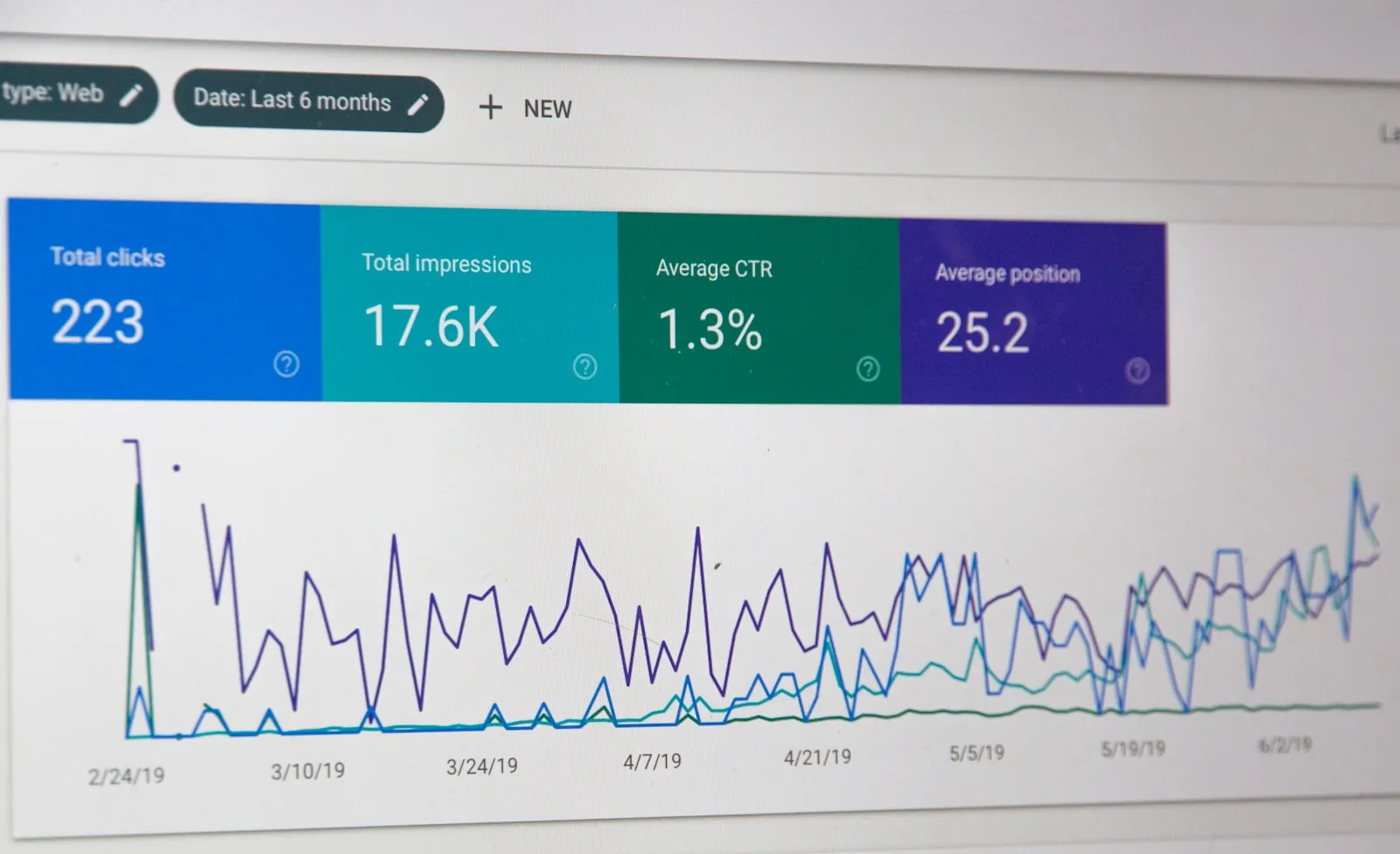
Photo by Stephen Phillips on Unsplash.
For most US small businesses, Google ads is the right first paid channel. Specifically, all of these tilt toward Google:
- Local service businesses. People search “AC repair near me,” they don’t scroll Instagram thinking about their broken AC.
- B2B services and software with a known search problem. Customers know what they need; they’re looking for who can do it.
- High-intent purchases where the customer has already decided. “Buy [specific product],” “book [specific service].”
- Emergency or time-sensitive services. Locksmith, plumber, urgent care, attorney for active legal issue.
- Anything where the customer is researching before buying. Pricing, reviews, alternatives. Search intent runs the funnel.
Across the local service businesses we run paid media for, Google ads typically produces qualified leads at 2-4x the rate of Meta on the same budget. That’s not a knock on Meta; it’s just that intent wins for these categories.
When Meta ads is actually the right starting point
Photo by Arkan Perdana on Unsplash.
Meta gets recommended too aggressively in the small business marketing world, but the recommendations aren’t all wrong. These categories should genuinely start on Meta:
- Visual consumer products. Apparel, home goods, beauty, jewelry, food, anything photogenic. People discover these via scroll, not search.
- Brand-new businesses with no Google search demand for what you sell. If nobody is typing your category name yet, Google ads have nothing to show against.
- E-commerce upper- and mid-funnel. Discovery and consideration plays. Google handles bottom-funnel branded and category searches; Meta handles the introduction.
- Local businesses with strong visual content (restaurants with great food photos, fitness studios, salons). Instagram is where these audiences live.
- Life-event triggered services. New parents, recent movers, newly engaged. Meta’s targeting catches life-stage signals better than Google.
If you’re an apparel brand running only on Google search, you’re probably leaving most of your potential demand on the table. The discovery has to come from somewhere; Google is rarely it for those categories.
The cost question: are Meta ads cheaper than Google ads?
This is the question that comes up in every initial conversation. The honest answer: Meta clicks are usually cheaper, but Meta clicks are also usually worth less per click. Comparing CPC across platforms without comparing conversion rate is the most common mistake I see in DIY paid media.
Per WordStream’s 2025 Google Ads benchmarks (retrieved May 2026), the average Google search CPC across industries sits around $5.26, with conversion rates averaging 7.52%. Meta clicks across industries average closer to $1.50 to $3.00 depending on objective, but Meta conversion rates run lower because the click is colder; the user wasn’t searching for what you sell.
Math it out. $5 click at 7% conversion rate yields a cost per conversion of $71. $2 click at 1.5% conversion rate yields a cost per conversion of $133. The cheaper click is the worse channel for that conversion. Almost every paid media audit we run shows this trap somewhere: a business that switched to Meta because the clicks were cheaper, then discovered the leads were worse, then blamed Meta. Meta did its job; the customer-intent profile just didn’t match the campaign goal.
The useful frame is cost per qualified customer, not cost per click. By that measure, for most US small businesses, Google search is still cheaper than Meta, despite the CPC being 2-3x higher.
How to sequence Meta and Google Ads for a small business
If you have one thousand dollars a month to spend on paid media, here’s the order I’d put a small business through:
- Months 1-3: Google ads only. Capture the existing demand. Set up conversion tracking properly. Build the keyword and search-term data you’ll need later. Most US small businesses can hit a viable channel here within 90 days at $1,000-$1,500 monthly, though the floor for serious returns is closer to $2,000.
- Months 4-6: Google ads plus Meta retargeting. Once Google is producing measurable traffic, run cheap Meta retargeting against people who landed on your site but didn’t convert. This is the cheapest Meta money you’ll ever spend, because the audience is already familiar. Budget: $200-$500/mo at this stage.
- Months 7-12: Layer Meta prospecting if it makes sense for your category. If you’re in a category where Meta prospecting works (visual products, local consumer, life-event triggered), start a small prospecting budget alongside Google. Otherwise, scale Google deeper instead.
Concrete reason for this order: Google ads is faster to evaluate. You can know if your account is working in 60-90 days. Meta prospecting takes 90-180 days to know, and it requires more creative volume. Starting with the channel that learns faster makes the rest of the program move faster too. The full budget framework by industry sits in the Google Ads budget article.
The “run both” recommendation, qualified
The standard advice you’ll hear is “run both.” That advice is correct for businesses spending $5,000+ a month and incorrect for businesses spending $1,500. At small budgets, splitting means you fund both poorly and learn from neither.
The threshold I use: at under $3,000 a month total paid budget, pick one channel and go deep. At $3,000-$5,000, you can usually run primary channel plus retargeting on the other. Above $5,000, you can run both as primary channels if your category supports it.
The exception: if you sell a visual consumer product, run both from day one even at $1,500/mo total. Splitting $800 Google search and $700 Meta is still the right move for an apparel brand or a restaurant. Your category determines this more than your budget does.
When neither is the right channel
Two situations where paid media on either platform is the wrong fix.
First: your Google Business Profile isn’t sorted yet. Paid traffic to a business that doesn’t show up in the local pack is paying twice for the same impression. Fix the visibility problem first.
Second: your conversion process is broken. If your website doesn’t convert visitors, your call answer rate is under 50%, or your follow-up cadence is missing, paid media will just expose the leak louder. Most paid media “failures” I audit are conversion-process failures the paid channel just made visible. The seven components of a landing page that converts are in the landing page article.
FAQ
Are Meta ads cheaper than Google ads?
Per-click, almost always yes. Meta CPC averages $1.50-$3.00 across industries; Google search CPC averages $5-$8. But per-converted-customer, Google is usually cheaper for high-intent categories (local service, B2B, urgent needs). Meta is cheaper per converted customer for visual consumer products and discovery plays. Compare cost per qualified customer, not cost per click; the click-cost comparison alone is misleading.
Is Google ads better than Facebook ads for small business?
Better for capturing existing demand (someone is already searching). Worse for creating new demand (someone hasn’t heard of your product yet). Most US small businesses, especially local service businesses, have more capturable demand than they’re capturing, which makes Google the better starting channel for them. Product-led consumer brands are the main category where Facebook/Instagram is correctly the starting channel.
Should I run Google ads or Meta ads first?
Google ads first for local services, B2B, professional services, and anything customers actively search for. Meta ads first for visual consumer products, brand-new categories with no search demand, and businesses with strong visual content. The honest test: if you can think of three search terms a customer might type to find your business, start on Google. If you can’t, start on Meta.
How much should I spend on Meta ads as a small business?
Realistic minimum for Meta to do real work is $1,000/mo, though many small businesses run useful retargeting at $200-$500 alongside a Google primary. For Meta prospecting (cold audiences), $1,500-$3,000/mo is typical for a small business. Below that, your audience size is too small to optimize against; the algorithm doesn’t have enough signal.
Can I run Google ads and Meta ads with the same budget split 50/50?
Usually no, especially below $3,000/mo total. At $1,500 monthly split, both channels are underfunded and you can’t tell what’s working. Better pattern: 100% in primary channel for 90 days, then 70/30 split with the secondary channel doing retargeting. Above $3,000/mo total budget, a 60/40 or 70/30 mix becomes workable, depending on category.
Beefed Up runs Google Ads and Meta paid media programs for small businesses. We start most clients on Google and layer Meta in once the foundation is producing. Get in touch for a current-state audit and a real recommendation for your business.


