
Introduction: What Local Search SEO Is (and Why It Matters in 2026)
Local search SEO optimizes your online presence for visibility in local search results - the map listings, the three-business pack at the top of Google, and the organic results underneath them. In 2026, it also means showing up inside AI-powered search experiences like Google’s AI Overviews, ChatGPT, and voice assistants. If your business serves a specific geographic area, this is the marketing channel that puts you in front of people who are already looking for what you sell.
The numbers make the case clearly: 46% of all search queries have local intent, and 76% of people use smartphones to find local businesses. When someone in Dallas types “HVAC repair Dallas,” or a driver in Tampa searches “personal injury lawyer Tampa,” or a tourist taps “coffee shop near me,” they’re not browsing - they’re buying. Local searches are often highly transactional, reflecting immediate buying intent. Local SEO increases foot traffic and leads for businesses positioned to capture that demand.
Local search SEO is crucial for businesses serving specific geographic areas because showing up in these results is often the difference between growth and stagnation. That’s exactly where Beefed Up operates. As a U.S.-based digital marketing agency focused on local SEO, AI search optimization, and growth systems for service businesses, we help contractors, legal firms, medical practices, and home service companies turn local search into a predictable lead engine.
This article is a practical playbook. You’ll learn how Google’s local algorithm works, which ranking factors carry the most weight, and exactly what to prioritize first - whether you’re starting from zero or tuning an existing presence.
How Local Search Works: Local Pack, Maps, and Organic Results
Picture someone in Phoenix searching “emergency plumber near me” in September 2026. Here’s what they see: a map with pins at the top of the page, three business listings directly below that map (the local pack), and then standard organic search results further down. Depending on the query, an AI Overview may also appear, summarizing options with links.
Google’s local algorithm runs alongside its core search algorithm, layering local signals - proximity, Google Business Profile data, reviews, citations - on top of general relevance and authority. This means local SEO targets both the local pack and standard search results, plus visibility inside assistants and AI Overviews.
Here’s a quick breakdown of where local businesses appear in search results:
-
Local Pack: Google’s Map Pack displays the top three local businesses above organic results. This is the highest-visibility placement for most local queries.
-
Google Maps results: When users tap into Maps directly, they see a full list of relevant businesses sorted by location, rating, and prominence.
-
Local organic results: Standard website listings below the pack, driven by on-page SEO, content relevance, and backlinks targeting city or service terms.
-
AI Overviews and assistants: Emerging in 2024–2026, these pull from the same local index but re-rank using entity matching and semantic signals.
Key components of local search SEO include Google Business Profile, local citations, and online reviews - all feeding into these result types simultaneously.
Google’s Local Algorithm: Proximity, Relevance, and Prominence
Google ranks local search results based on three pillars: relevance, distance, and prominence. Understanding each one helps you prioritize the right tasks.
Proximity is straightforward - the physical distance between the searcher and your business. A chiropractor located half a mile away in Austin will outrank one ten miles away when someone searches “chiropractor near me,” assuming other factors are roughly equal. Your GBP address or defined service area anchors this signal.
Relevance measures how well your business profile, website content, and categories match the search term the user typed. If someone searches “family law attorney Tampa,” a GBP with that as the primary business category, paired with service pages targeting those exact phrases, will rank higher than a generic “lawyer” listing.
Prominence reflects how well-known and trusted your business is online. This includes online reviews, backlinks, citations, press mentions, and brand searches. The more consistently your business details appear across the web, the stronger this signal becomes.
Google’s local algorithm has evolved significantly over time. Google’s Pigeon algorithm was introduced in July 2014, and the Google Pigeon update improved local search relevance by tying local results more closely to traditional ranking signals. Later, Possum in 2016 made rankings more sensitive to proximity and filtered duplicate listings. Hawk in 2017 adjusted geo-filtering further. Between 2023 and 2026, spam sweeps penalized keyword-stuffed business names and AI content updates continued reshaping how local businesses rank.
Local SEO vs Traditional SEO: What’s Actually Different?
Traditional SEO targets national or broad queries - think “best CRM software” or “how to build a website.” Local SEO focuses on ranking real-world local businesses in a specific city or service area, targeting queries with clear local intent like “best dentist in Miami.”
A local business can appear in the local pack and Google Maps without a website, using only a Google Business Profile. But a website is still strongly recommended: it provides authority signals, content control, schema markup, and a conversion path. A well-optimized website should deliver clear information to both customers and search engines.
Here’s how the two approaches differ:
| Aspect | Traditional SEO | Local SEO |
|---|---|---|
| Goal | Rank broadly, drive traffic from many geographies | Drive leads, calls, and visits from a specific local area |
| Primary ranking elements | Content relevance, domain authority, backlinks | Proximity, GBP signals, reviews, local citations |
| Key tasks | Blog content, technical SEO, national link building | GBP optimization, NAP consistency, local reviews, geo-targeted pages, local link sources |
| User intent | Informational or transactional, geography-neutral | Local intent - searcher wants to visit or hire nearby |
The intent difference changes everything: your target audience, your keyword research, your content strategy, and even how you measure success.
Google Business Profiles: Your Primary Local Search Asset
Your Google Business Profile is what shows up in Maps, the local pack, and knowledge panels in search engine results. It’s also what AI assistants pull from when recommending local businesses. Claim your Google Business Profile to improve local visibility - it’s the single most impactful step you can take.
Complete your Google Business Profile with accurate business details across every field:
-
Business name: Use your real, legal name. Keyword stuffing here triggers suspensions under Google’s local algorithm enforcement.
-
Primary and secondary categories: Choose the most specific business category available (e.g., “Family law attorney” rather than “Lawyer”). Add relevant secondary categories for additional services.
-
Address or service area: Set your physical location or define your service area if you travel to customers.
-
Phone, website URL, hours: Include holiday hours. Keep these updated so potential customers and search engines always have accurate info.
-
Services and products: Describe each service with detail. This feeds relevance signals.
-
Photos: High-quality images on your Google Business Profile enhance engagement - upload interior, exterior, team, and work-in-progress photos regularly.
-
Posts and updates: Regular updates and engagement through Google Business Profile signals activity to Google.
Encourage customers to leave reviews on your Google Business Profile and regularly update your Google Business Profile to maintain accuracy.
If your business isn’t appearing where it should, our guide on why your business might not show up on Google walks through the most common causes and fixes.
At Beefed Up, we audit existing GBPs for new clients - checking claimed status, verifying data, matching categories to real services, and configuring call tracking numbers without disrupting NAP consistency.
Local Keyword Research: Finding “Near Me” and City-Based Opportunities
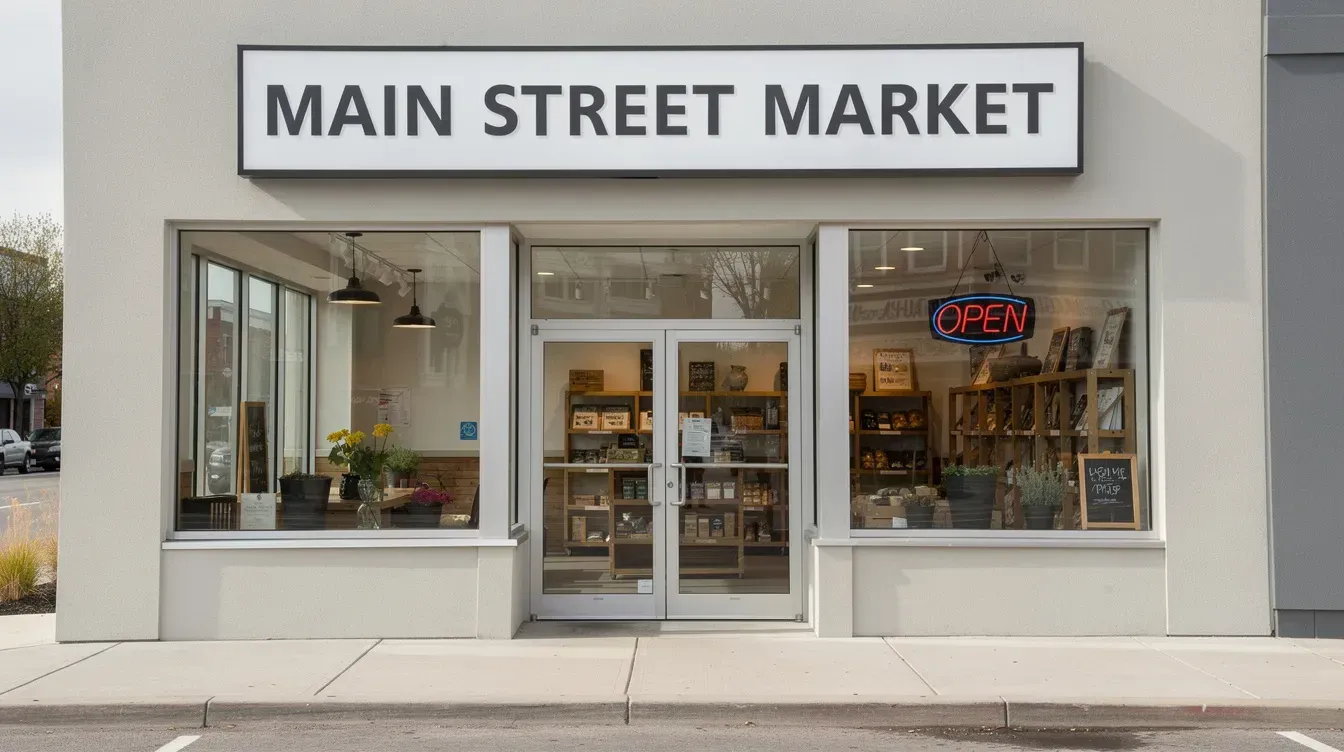
Local keyword research helps capture qualified local traffic by pairing services with specific geographies. Instead of targeting “roof repair” broadly, you target “roof repair Denver” or “AC installation near me” - phrases where nearby customers are actively searching for help.
Here’s a simple four-step process:
-
Brainstorm services: List every service your business offers.
-
Pair with locations: Match each service to your target cities, neighborhoods, and ZIP codes.
-
Check autocomplete and “People Also Ask”: Type your service + city into Google and Google Maps. Note the suggestions.
-
Validate with keyword research tools: Use Google Keyword Planner, Ahrefs, or SEMrush to confirm search volume and competition for each local keyword.
Focus on transactional terms with clear intent. “Same-day water heater repair Chicago” is far more valuable than “water heater installation guide.” Building localized content on websites improves search engine understanding of business areas served.
Here are examples of money keywords across industries:
-
Plumbing: “emergency plumber in [City],” “24-hour plumbing service near me,” “[City] water heater repair”
-
Legal: “personal injury attorney [City],” “DUI lawyer in [City],” “divorce attorney near me”
-
Med spa: “Botox clinic [City],” “medical spa in [City],” “skin treatment near me”
For multi-location businesses, Beefed Up structures keywords per city and service - “landscaping Orlando,” “landscaping Winter Park,” “landscaping Kissimmee” - each getting its own content and landing page.
On-Page Local SEO: Turning Your Website into a Local Authority Hub
On-page SEO for local search combines standard best practices with strong geographic signals. Every page targeting local customers should communicate both what you do and where you do it.
Key on-page elements to optimize:
-
Title tags and meta descriptions: Include service + city naturally (e.g., “Emergency Plumber in Phoenix | 24/7 Service”).
-
H1 and H2 headings: Reinforce local content with geographic terms.
-
URL slugs: Use clean, descriptive URLs like /roof-repair-dallas-tx/.
-
Internal links: Connect service pages to location pages and vice versa.
Creating unique, localization-specific service pages enhances local SEO efforts. Don’t just swap city names across templates - mention local landmarks, neighborhoods, weather conditions, or building codes that make each page genuinely useful. Google identifies and penalizes thin, duplicated local content.
Embed a Google Map of your business location on your site. Show your NAP in the footer. Using LocalBusiness structured data helps search engines better understand business details - implement local business schema markup in JSON-LD format so engines and AI assistants can parse your entity, services, and hours.
Beefed Up often builds or rebuilds local business websites with this structure baked in from the start, rather than bolting local SEO onto a weak site. If you’re weighing whether a new site is worth it, here’s why a website matters for small businesses in 2026.
Local Citations and NAP Consistency: Building Trust Across the Web
Local citations include mentions of your business’s NAP - Name, Address, and Phone number - on directories, social platforms, and other local listings across the web. Structured citations appear in online directories like Yelp, Apple Maps, Bing Places, and Facebook. Unstructured citations are mentions on non-directory websites like blog posts, news articles, or community pages.
Citations validate your business’s legitimacy and drive authority. But only if they’re accurate. 62% of consumers avoid businesses with incorrect online information, and inconsistent NAP can confuse both local customers and Google’s local algorithm.
Maintaining consistent business information is critical for local SEO effectiveness. Here’s the process:
-
Audit: Identify everywhere your business appears online. Note misspellings, old addresses, duplicate profiles.
-
Correct: Claim and fix listings on major platforms first - Google Maps, Apple Maps, Bing Places, Yelp, Facebook.
-
Fill gaps: Create profiles on missing platforms, especially industry-specific business directories (legal directories for attorneys, health directories for medical practices).
-
Maintain: Audit local citations consistently to ensure accurate business information is presented. Set a quarterly review cadence.
Beefed Up prioritizes core mapping platforms first, then top U.S. aggregators, then niche directories matched to each client’s industry. Every listing gets complete profile data - hours, photos, services, and website links where allowed.
Online Reviews and Reputation: A Core Local Ranking Signal
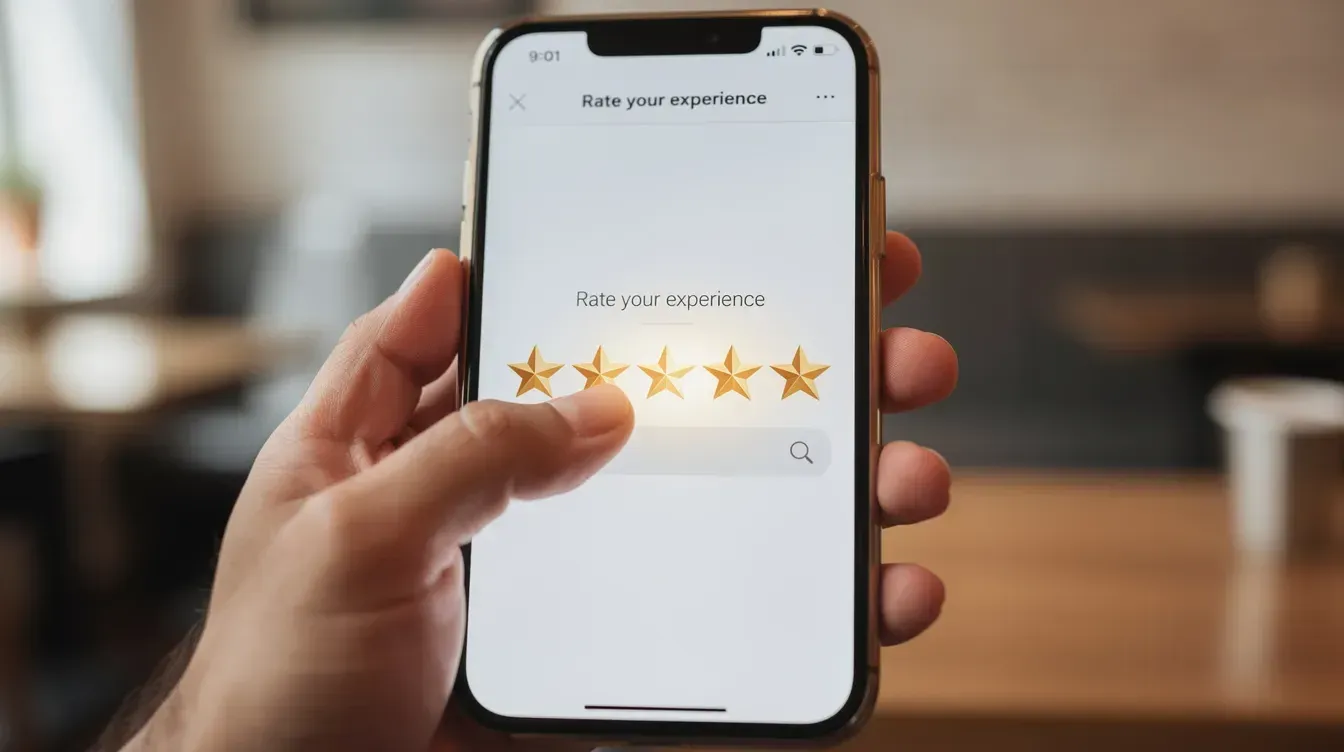
Positive online reviews influence local rankings and enhance consumer trust. People click the 4.7-star business with 250 Google reviews before the 3.2-star one with 12. And 95% of customers read business reviews before purchasing - reviews are both a ranking signal and a conversion factor.
Online reviews influence Google rankings for local searches through multiple variables: volume, velocity, recency, response rate, and sentiment. Research shows reviews carry roughly 17% of weight in local pack rankings alone.
Practical tactics for generating reviews ethically:
-
Post-service follow-ups: Send automated SMS or email requests within 24 hours of completing a job.
-
QR codes: Print review links on receipts, business cards, or signage at the point of service.
-
Simple landing pages: Create a page with direct links to your Google review form.
Engaging with reviews builds trust with both customers and search engines. Respond to every review - positive and negative reviews alike - professionally and quickly. For negative reviews, attempt resolution and show empathy. This demonstrates to both your local community and algorithms that the business is actively engaged.
Encouraging customer reviews and professional responses improves local rankings and local visibility over time. Encouraging reviews can significantly boost business credibility. Beefed Up automates review request flows and missed call text-back systems so local businesses consistently grow review volume without manual chasing.
Local Link Building: Earning Authority from Nearby Sites
Link building for local SEO prioritizes relevance and locality over raw domain authority scores. A link from your city’s chamber of commerce or a neighborhood blog often outweighs one from a high-authority national site with no geographic connection to your local market.
Local backlinks from reputable sources strengthen a business’s local authority. Backlinks from local sites boost local SEO rankings because they reinforce geographic relevance to search engines. Local backlinks signal trust to search engines in a way that generic directories can’t replicate.
Concrete local link sources include:
-
Sponsoring local events and youth sports teams
-
Local chamber of commerce memberships
-
Guest posts on neighborhood or community blogs
-
Partnering with local colleges or trade schools
-
Offering expert commentary to local journalists
Engaging in community events can earn valuable backlinks while building genuine relationships in your local area. High-quality backlinks improve website authority and visibility, and even modest local links compound over time.
Beefed Up plans structured outreach campaigns for clients: identifying local sources, preparing localized content, offering event participation or expert resources, and tracking outcomes to build sustainable, white-hat link profiles.
Technical and UX Foundations: Site Speed, Mobile, and Conversion
76% of people use smartphones for local business searches, which means mobile-friendly websites are essential as most local searches occur on mobile devices. If your site is slow on a phone or hard to navigate, you lose leads even if your local search rankings are strong.
Key technical factors to check:
-
Core Web Vitals: LCP, FID, and CLS scores directly affect user experience and search rankings.
-
HTTPS: Secure sites rank better and earn more trust.
-
Fast hosting and CDN: Page load time under 3 seconds is the goal.
-
Clean URL structure: Logical, crawlable navigation that search engines can index easily.
Mobile usability specifics matter for local businesses:
-
Tap-to-call buttons above the fold
-
Click-to-text options
-
Directions links that open directly in Google Maps
-
Contact forms that are short and simple
Businesses with accurate local optimization convert better when the website experience matches the search intent. Add tracking - call tracking, form tracking, GA4 conversion events - so improvements in local rankings can be tied to actual leads and revenue. Understanding what website design actually costs helps you budget for a site that performs.
Beefed Up builds local business websites with conversion-focused UX and integrated call and text automation to capture every lead that finds you.
AI Search and Local SEO: Preparing for Google, ChatGPT, and Beyond
Local search is expanding beyond traditional search results into AI Overviews, Google Assistant, ChatGPT, Gemini, and other LLM-powered local search engines. Studies show that many businesses ranking well in Google Maps don’t appear in AI assistant results because AI systems are more selective about which relevant businesses they recommend.
Structured data, detailed service descriptions, and consistent GBP plus website information help AI systems understand and recommend a local business. Strong reviews, citations, and brand mentions improve the odds of being surfaced inside AI answers for queries like “Who’s the best roofer in Boise?”
Specific AI-era optimizations to implement now:
-
Schema markup: FAQ, review, and local business schema in JSON-LD format
-
Entity consistency: Identical business name, services, and hours across every platform
-
Up-to-date GBP: Current hours, services, and attributes - especially for emergency or after-hours businesses
-
Third-party mentions: Seek coverage in local press, industry blogs, and community sites that AI systems crawl
-
Semantically rich content: Detailed service descriptions, FAQs, and “why choose us” sections that answer the search queries AI assistants try to resolve
Beefed Up’s AI search optimization extends local SEO into these new environments so your business’s visibility isn’t limited to one platform.
Tracking Local Search Performance and Proving ROI
Effective local SEO requires tracking with concrete metrics - not guesswork. Without measurement, you can’t prove ROI or know where to invest next.
Core KPIs to monitor:
-
Local pack and Maps rankings by keyword and ZIP code
-
Organic traffic from target cities or service areas
-
Calls (phone and click-to-call)
-
Direction requests from Google Maps
-
Form fills and booked appointments
Tools to use:
-
Google Business Profile Insights: Search volume, calls, direction requests, photo views
-
Google Search Console: A free tool for monitoring which search queries drive impressions and clicks to your site
-
GA4: Website behavior, conversion events, traffic sources by geography
-
Geo-grid rank trackers: Visual maps showing local rankings across a service area
For tips on tying ad and organic data together, our conversion tracking setup guide covers the technical details.
Beefed Up delivers monthly reports tying local search visibility to leads and revenue, with recommended next steps. For most local businesses, meaningful improvement in local pack visibility and lead volume takes four to six months of consistent work. Treat local SEO as an ongoing system - review monthly, iterate quarterly, commit for at least six to twelve months.
Building a Complete Local SEO System with Beefed Up
Mastering local SEO means assembling every piece into a single, repeatable system: optimized Google Business Profile, strong website with local service and location pages, NAP consistency across all business listings, robust review management and reputation building, local link building, technical health, and AI search readiness.
Beefed Up works specifically with U.S. small and mid-sized service businesses - contractors, medical practices, legal firms, home services - to implement this as a repeatable growth system. We handle the audit, the prioritized roadmap, the implementation, and the ongoing tracking so you can focus on running your business. If you’re weighing how much to allocate to marketing, local SEO consistently delivers one of the highest returns for service businesses.
Ready to attract more customers through local search? Request a free local SEO audit where we review your current local search presence and outline a 90-day action plan built around your market, your local competitors, and your growth goals.
-
More local search visibility across Google, Maps, and AI assistants
-
More calls, direction requests, and booked jobs from nearby customers
-
A system that compounds - not a one-time fix that fades
-
Less manual busywork chasing leads, more time doing the work you’re great at