
Growing a small business online is less like pulling a lever and more like stacking floors of a building. Five floors, each one resting on the one below it. Skip the foundation and the rest of it wobbles. Build the layers in order and growth starts to feel almost mechanical.
Most small business owners want there to be a single lever. The Instagram trick, the SEO hack, the ad platform that prints money. There isn’t one. There never was. The truth that took me a decade to admit is that the businesses that grow online are doing five unglamorous things in the right order, and the businesses that don’t are skipping one of them.
This article is the long version of that idea. The five layers of the stack, in the order I’d build them, and the actual work that goes into each. None of it is magic. All of it is doable. Most of it most businesses skip.

Photo by Matheus de Souza on Unsplash.
The five-layer stack for growing a small business online
Picture a building. Five floors, each one resting on the one below it. You can’t put the penthouse before the foundation. Same idea here.
- Brand foundation (what you stand for + how you look + what you call things)
- Website (the asset you actually own)
- Paid acquisition channel (one, until it works, then add more)
- Organic compounding (SEO, content, reviews, Google Business Profile)
- Tracking and measurement (how you know what’s working)
I’m going to walk through each in order, because the order matters. In my experience, businesses that skip ahead spend a lot of money and never get traction. Businesses that build in order spend less and grow faster.
Layer 1: Brand foundation
Most small business owners think branding is a logo. It’s not. The logo is the easy part. Brand foundation is the answer to three questions every customer asks subconsciously in the first ten seconds of meeting you:
- What do you do?
- Who’s it for?
- Why should I trust you?
If your homepage, your Instagram bio, and your Google Business listing each answer those three questions differently, your brand isn’t built yet. Customers feel that inconsistency even if they can’t articulate it.
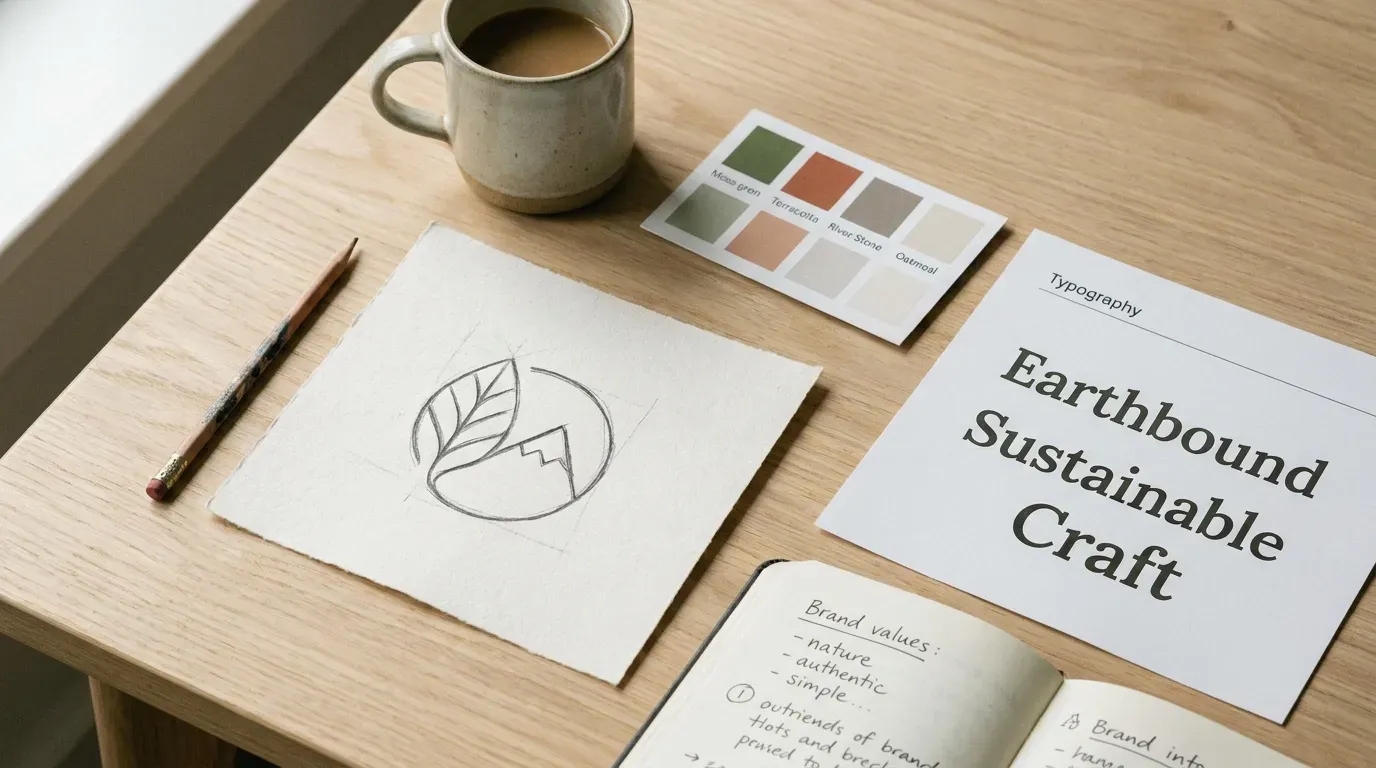
What to do: before you spend a dollar on ads or a day on SEO, write down a one-sentence answer to each of the three questions. Then audit every public surface of your business (website, social, email signature, GBP) against those three answers. Where they conflict, fix the surface, not the answer. The brand foundation work we do for clients is essentially this exercise at depth, but you can start it yourself in an afternoon.
Layer 2: A website you actually own
I’ve written a whole article on this (why a website matters for a small business, in case you want the long version), but the short version: every other channel you use to grow online is rented. Instagram can suspend you. Yelp can bury you. Google’s algorithm can change. Your website is the only owned asset in the stack. Build it before you build on top of it.
A good small business website doesn’t need to be expensive or elaborate. It needs to be five things: fast on mobile, clear about what you sell, organized by service or product page, optimized for local SEO (NAP visible everywhere), and easy to convert from (clear CTA on every page).
What to do: if your current website doesn’t hit those five marks, fix the site before you spend money on traffic. Driving paid traffic to a broken site is the single most common waste of money in small business marketing. Our web design service is built around getting those five things right and skipping the cosmetic upsells.
Layer 3: One paid channel, until it works
Once the foundation and the website are solid, you need a source of new visitors. You have two options: pay for them or earn them. Earned traffic (SEO, content, referrals) takes months to compound. Paid traffic shows up the day you turn it on.
For most small businesses, Google Ads is the right first paid channel. Because Google captures intent. Somebody searching “plumber near me” is ready to call a plumber. Compare that to Instagram, where you’re interrupting somebody scrolling through their friend’s vacation photos to pitch them on your service.
Pick one channel. Run it for at least 90 days. Optimize relentlessly within that channel before adding a second. The most common mistake I see is small businesses spreading $1,000/mo across Google, Meta, LinkedIn, and a postcard mailer. None of them ever get enough budget or data to optimize. Think with Google’s research on the new consumer decision-making process (retrieved May 2026) is the cleanest public articulation of why Google Search beats interruption channels for direct response.
How much should you spend? It depends on your revenue, your category, and your stage. Use our free marketing budget calculator for a calibrated monthly range, or read the full budget framework for the long version.
Layer 4: Organic compounding (SEO, content, reviews, Google Business Profile)
Paid traffic gets you customers today. Organic traffic gets you customers for free in 12 months. You need both, and they work better together than either does alone.
Organic compounding has four real components for a small business:
Google Business Profile (the highest-ROI hour of marketing work you can do)
Most small businesses have a Google Business Profile they set up once and never touched again. Verifying it, filling in every field, posting weekly updates, adding photos monthly, and replying to every review is a couple of hours per month and produces results that paid ads cannot match. If you’re not showing up on Google Maps for your services, the GBP is almost always why.
SEO foundations on your website
One page per service or product. Local terms in the page titles and headlines. Schema markup for businesses, products, and reviews. Internal links between pages. This is the unglamorous part of SEO that actually works. SEO is not a hack; it’s a discipline of making sure your website is easy for Google to understand and trust. Google’s own SEO Starter Guide (retrieved May 2026) reads like a checklist of these fundamentals.
Content cadence
One real article per month, written for your customers (not for SEO software), answering questions they actually ask you. After 12 months you have 12 articles. After 36 months you have 36. Each one quietly attracts traffic forever. This article you’re reading is part of our compounding stack.
Reviews
Reviews are the single biggest local SEO ranking signal and the single biggest conversion factor when somebody lands on your Google Business Profile. BrightLocal’s Local Consumer Review Survey (retrieved May 2026) consistently places review signals in the top three influences on Local Pack ranking, year after year. Build a process to ask every happy customer for a review by SMS (not email, the response rate is 3-5x higher in our campaigns) and reply to every review you get, positive or negative.
Layer 5: Tracking and measurement
This is the layer that’s invisible but determines everything. If you don’t know which channels are producing leads and which are wasting money, you’ll keep funding the wrong ones.
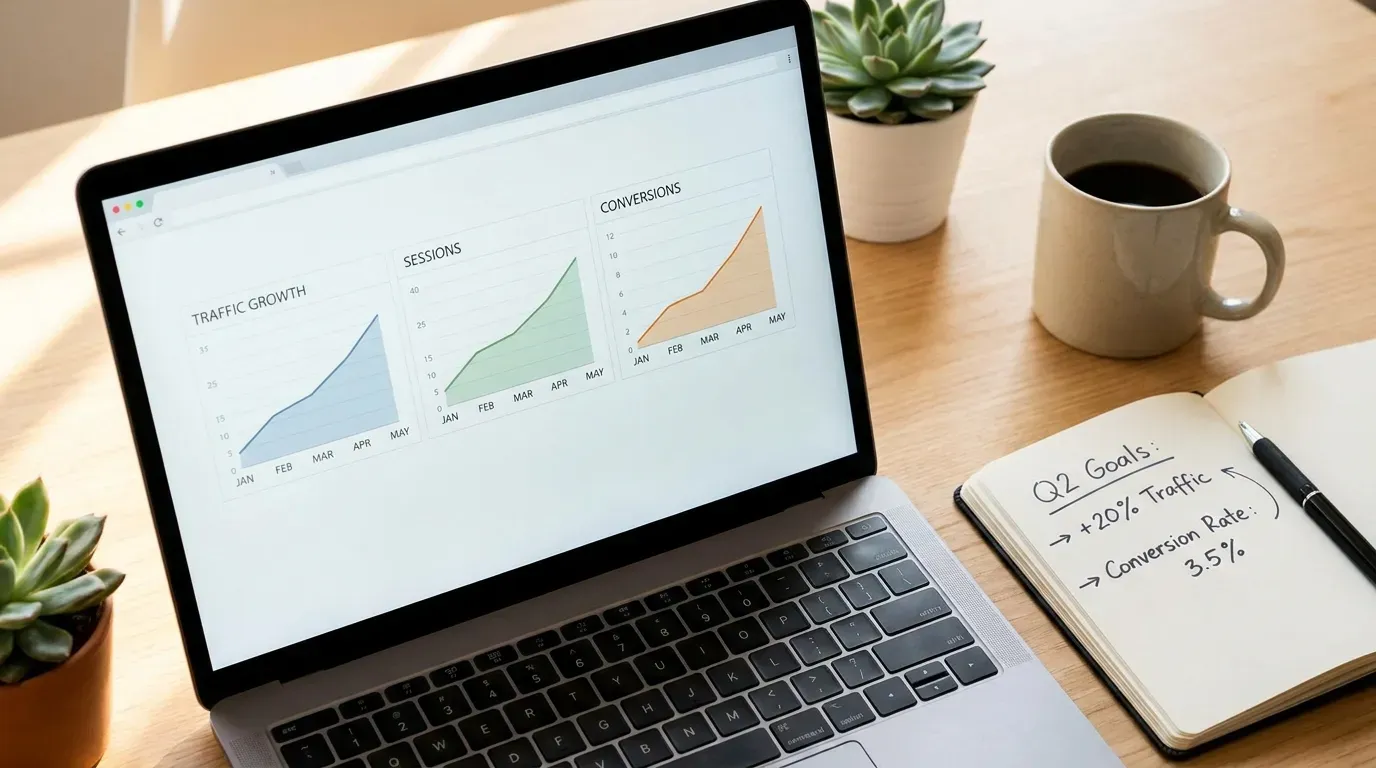
The minimum tracking stack for a small business:
- Google Analytics 4 (free). Or whichever privacy-first analytics tool you prefer (Fathom, Plausible) if you’re sensitive to that.
- Call tracking (CallRail, around $45/mo) if phone calls matter to your business. Most service businesses need this.
- Conversion events. Every form submission, every call, every checkout. Tagged in Google Ads, in Analytics, and in your CRM.
- A simple monthly review. Where did leads come from? What was the cost per lead by channel? Which channels improved, which got worse, which to scale, which to cut.
Without this layer, every other layer is a guess. With this layer, every dollar of marketing spend becomes a measurable bet you can adjust.
How to grow a small business online when you have no money
This is a real question, and the honest answer is: the same five layers, just slower and more manually.
Brand foundation
do it yourself. The three-question exercise costs nothing.
Website
build it on a low-cost platform (Webflow, Squarespace, Wix) and iterate. A $300 DIY site that actually converts beats a $10,000 site you can’t afford to launch.
Paid channel
skip this layer until you have $1,500/mo to invest minimum. Below that you’re not buying enough data to optimize.
Organic compounding
this is your channel when budget is tight. GBP work is free. SEO foundations are free. Asking for reviews is free. One article a month costs you 4 hours.
Tracking
the free stack (GA4, Search Console, a spreadsheet) covers 90% of what you need.
This is genuinely how most successful small businesses I’ve worked with grew in their first year. Paid acquisition is a multiplier, not a starting point.
How to grow a small business online fast
“Fast” is the other end of the same question. The fastest path I’ve seen looks like this, in order:
- Lock in the brand and website foundation in one focused 30-day sprint.
- Launch a Google Ads campaign with a budget you can sustain for at least 90 days.
- In parallel, get the GBP optimized and start the review-collection process.
- At day 90, evaluate the ads. Scale what’s working, cut what isn’t.
- At day 180, layer in a second channel (paid social, LSA, or SEO content depending on category).
“Fast” in this game is six months, not six weeks. Anyone selling you faster is either lying or charging you the full year of growth in month one.
FAQ
How long does it take to grow a small business online?
Genuine compounding usually starts around month 6 and accelerates through month 18. The first 90 days are foundation work and channel testing. Months 4-6 are optimization. Months 6-12 are when paid channels mature and organic starts producing real traffic. Year 2 is when most businesses see the real returns.
How to grow a small business on social media specifically?
Pick one platform that matches where your customers actually are (not where it’s trendy). Post consistently. Engage with the comments. Don’t sell in every post (people scroll past sales pitches). Social media is a brand awareness and trust-building channel for most small businesses, not a direct sales channel.
Can I grow a small business online without ads?
Yes, slower. Lean entirely on organic compounding (Layer 4). You’ll get to the same place as ad-buying competitors, but it’ll take 12-18 months instead of 6.
What’s the biggest mistake small businesses make trying to grow online?
Spreading a small budget across too many channels. $1,000/mo on one channel for 6 months will outproduce $100/mo on 10 channels for 6 months, every single time.
Beefed Up runs the full stack for small businesses: brand, website, Google Ads, and the SEO infrastructure that turns into organic traffic 6-12 months from now. Get in touch if you want help building the layers in the right order.


