
Phoenix is one of the top 5 US markets for powersports retail. Year-round riding weather (340+ sunny days), a metro of 5 million wealthy enough to buy toys, serious off-road culture from the deserts north and east of the Valley, Westworld hosting Barrett-Jackson and the AIMExpo dealer show, Firebird Raceway pulling drag racing year-round, and Phoenix Raceway bringing NASCAR weekends twice a year. The customer is here. The lifestyle is here. The weather doesn’t shut down riding season.
And yet most Phoenix powersports dealerships I’ve audited are running marketing that would be mediocre in Cleveland. Generic OEM-supplied creative, Google Ads campaigns that point at the dealership homepage, inventory feeds that aren’t connected to anything, service-department leads that come in through a contact form nobody monitors. The playbook is stuck somewhere around 2018.
This article is the modern playbook. I’m a racing fan first and an agency owner second; I built Beefed Up out of Cave Creek partly because I want to work with motorsports brands. What follows is the 5-channel marketing stack every Valley powersports dealer should be running, with the specifics of how to optimize OEM co-op fund spend (Honda, Yamaha, Polaris, BRP, Kawasaki) that most dealers either skip or screw up.
Why Phoenix is a structurally great powersports market
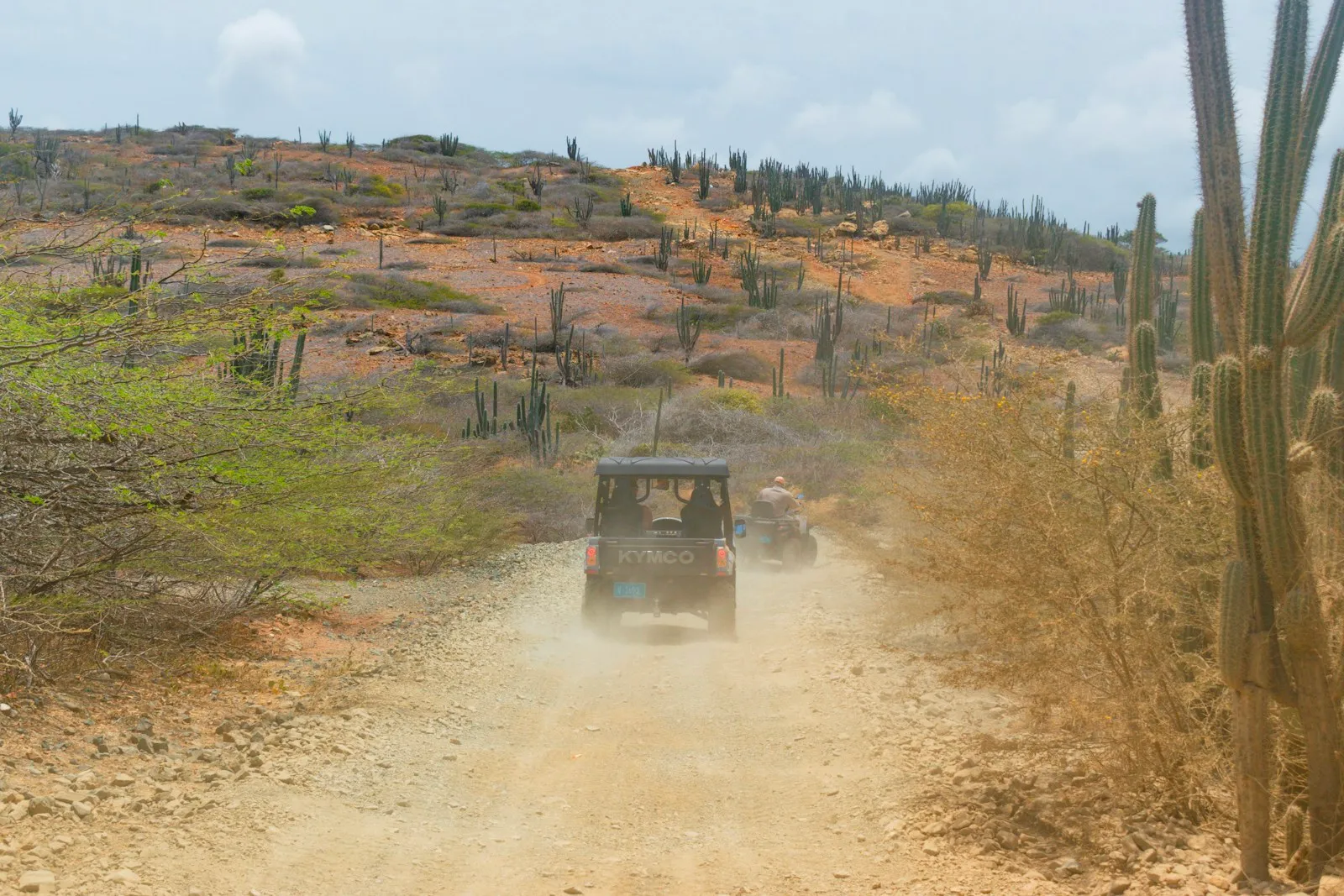
Photo by Vonsheezy on Unsplash.
Three structural advantages that don’t exist in most US markets:
Year-round buying season. In Cleveland or Minneapolis, powersports sales collapse from November to March. In Phoenix, January through March is peak side-by-side and off-road buying season because the desert is at its most rideable. Bike sales pace through the entire calendar with a soft summer dip when daytime temps hit 115. Effective marketing budget can run consistent monthly rather than seasonal-stacked, which makes Google Ads bidding strategies work much better.
Wealthy customer base. Scottsdale, Paradise Valley, Fountain Hills, and North Phoenix have substantial concentrations of households with income that supports $20K to $80K toy purchases. The Polaris RZR Pro R Ultimate at $40K isn’t aspirational here; it’s a Tuesday purchase. Pricing power on premium models is real in a way it isn’t in most US markets.
Multi-discipline density. Phoenix has serious populations in every powersports vertical: street bikes (Harley dealers across the Valley plus Japanese metric), off-road (KTM, Husqvarna, dirt bikes, dual-sport), side-by-sides (Polaris and Can-Am dominate), ATVs, jet skis on the lakes (Pleasant, Saguaro, Apache), and the cross-discipline buyers who own one of each. One Valley customer might shop your dealership 5 times over 10 years for 5 different vehicle types if you serve them well.
The 5 channels every Phoenix powersports dealer should be running
Channel 1: Google Ads with OEM co-op fund optimization
Google Ads is the highest-ROI channel for Valley powersports dealers in 2026. Customers search “[brand] dealer phoenix,” “[model] for sale phoenix,” “motorcycle dealer scottsdale” with serious purchase intent. The local pack + paid ads dominate those queries. Sitting out of the ads market hands those clicks to your direct competitors.
The OEM co-op fund piece: Honda, Yamaha, Polaris, BRP, and Kawasaki all reimburse dealers for a percentage of qualifying digital ad spend (usually 50%, sometimes higher during product launches). Most dealers either don’t claim it (leaving free money on the table) or claim it badly (running OEM-approved generic creative against high-intent search terms). Walked through in depth in our Google visibility article, but the dealer-specific application is: structure campaigns around dealer-specific landing pages (not OEM template microsites), use co-op fund creative requirements as a constraint, not the campaign strategy, and bid on brand + model + city queries with location-specific landing pages.
Channel 2: Local SEO + Google Business Profile with inventory feed
Phoenix powersports searches are massively local. “Motorcycle dealer phoenix,” “ATV dealer near me,” “side-by-side dealer scottsdale” all surface the local pack first. Google Business Profile (formerly Google My Business) optimization is the foundation play.
The inventory-feed integration is the unlock most dealers miss. Google Vehicle Ads and the Google Business Profile inventory connection let you surface specific units (with photos, pricing, mileage for used) directly in search results and on Maps. Customers searching for a specific model in their area see your inventory before they click any link. The setup takes 4 to 8 hours of dev work the first time; the lead quality is dramatically higher than text-only listings.
Channel 3: YouTube product walkthroughs as evergreen content
Powersports buyers are video-first researchers. The customer ready to spend $30K on a new RZR has watched 8 to 15 YouTube videos about it before they walk into a dealership. If those videos are all from MotoVlog channels and competing dealers, you’re not in the consideration set.
The dealer play: shoot dealer-specific walkthrough videos for the top-selling units (10 to 20 minutes each, casual, showing the actual bike on your floor or the actual side-by-side in your service bay). Publish to YouTube with the model name + your dealership in the title. These videos compound for years; a single walkthrough video can drive 20 to 50 walk-in leads over the unit’s model-year lifecycle.
Channel 4: Meta retargeting for service-department leads
New-unit Meta ads are restricted in some powersports categories and oversaturated in others. But service-department Meta retargeting (targeting people who’ve visited your service or parts pages) consistently produces ROI. Service revenue is the underrated profit center for most dealers; reactivating customers who haven’t been in for maintenance recently is fast money.
Channel 5: Email for service reminders + new-model launches
Most powersports dealers have an email list from prior customers but rarely email them. The two highest-ROI cadences: service reminders (every 6 months for owners on file, with a soft CTA toward booking) and new-model launches (twice a year, when the year’s new models are announced, with a soft CTA toward seeing them in person before the public reveal).
Owners of existing units are the warmest prospects you’ll ever have. They’ve already chosen to do business with you once. Don’t ignore them.
How OEM co-op fund actually works (the part most dealers get wrong)
Every major powersports OEM offers co-op fund support for qualifying dealer marketing spend. The mechanics:
Honda Powersports: typically 50% reimbursement on approved digital and traditional advertising, with quarterly or annual caps based on dealer tier. Approval requires Honda-supplied creative or pre-approved dealer creative.
Yamaha Motor: 50% reimbursement on qualifying co-op-approved campaigns. Specific creative requirements but flexibility on placement (Google Ads, Meta, local print, radio).
Polaris (including RZR, Ranger, Indian): tiered co-op based on annual dealer volume, typically 50% but higher during product launches. Inventory-feed campaigns get preferential reimbursement.
BRP (Can-Am, Sea-Doo, Ski-Doo): co-op available but more variable by region and current corporate marketing priorities; worth quarterly conversations with the rep about what’s currently approved.
Kawasaki Motors: 50% co-op on qualifying spend with specific creative compliance requirements.
The mistake most dealers make: running campaigns that meet co-op requirements but optimize for OEM brand awareness rather than dealer leads. The campaigns get approved for reimbursement but produce zero in-store traffic. The right approach: structure campaigns to meet co-op compliance AND optimize for dealer-specific conversions (showroom visits, service bookings, online inquiries). Both can be true; most dealers don’t insist on it.
How to build a Phoenix powersports dealership marketing system in 60 days
If your dealership is currently running 2018 marketing, this is the 60-day sequence to modernize without burning your operations.
Week 1-2: Foundation audit and Google Business Profile cleanup
Audit current state: what’s running, what’s measured, what isn’t. Claim and optimize Google Business Profile if not already. Confirm categories (Motorcycle Dealer, ATV Dealer, etc.), add 30+ photos of inventory and showroom, post weekly updates, gather the first wave of fresh reviews from recent customers. This step alone usually produces a measurable lead-flow lift within 30 days because most dealer GBPs are under-optimized.
Week 3-4: Conversion tracking + Google Ads campaign launch
Install Google Tag Manager + Google Ads conversion tracking on every lead form, every phone number (with call tracking), and the directions/map clicks. Without this, the Google Ads spend in the next step is flying blind. Launch the first Google Ads campaign focused on brand + model + city queries with co-op-approved creative pointing to dealer-specific landing pages.
Week 5-6: YouTube walkthrough content batch
Shoot 5 to 8 product walkthrough videos for the top-selling units currently on the floor. Don’t overproduce; one camera, 10 to 20 minutes each, conversational tone. Publish to YouTube with model + dealership in the title. These compound; the first 5 videos seed a content engine that produces leads for years.
Week 7-8: Service email reactivation + Meta retargeting
Pull the existing customer list out of the dealership management system (DealerVu, IDS, etc.). Send the first service-reminder email to every owner whose last service was 6+ months ago. Set up Meta retargeting pixel and launch a service-department retargeting campaign aimed at site visitors who hit the service or parts pages.
Week 9-10: Measurement review and channel rebalancing
Pull lead-attribution data from the first 60 days. Compare which channels actually produced showroom visits vs which produced cheap clicks. Reallocate budget toward the channels that produced real leads, scale back on the ones that didn’t. This is when the marketing system starts paying back its setup cost.
FAQ
How much should a Phoenix powersports dealership spend on marketing?
Established Phoenix powersports dealerships ($5M to $30M revenue) typically run 2% to 4% of revenue on marketing, which works out to roughly $8,000 to $25,000 monthly for most Valley dealers. Of that, $4,000 to $12,000 is usually Google Ads spend (often partly co-op reimbursed), $1,500 to $3,000 is content production (YouTube videos, photography), and the rest covers tools, retainer to an agency, and additional channels. The broader marketing budget framework is in our small business marketing budget article.
Do OEM co-op funds cover all digital marketing for dealers?
No. Co-op funds (Honda, Yamaha, Polaris, BRP, Kawasaki) typically reimburse 50% of qualifying advertising spend within annual caps and specific creative requirements. They don’t cover content production (photography, video), agency retainers, tools, or non-OEM-product marketing (like service-department promotion). Dealers should plan for OEM co-op to offset 30% to 50% of total marketing spend, not all of it.
What’s the best Phoenix powersports advertising channel?
Google Ads consistently produces the highest-ROI for transactional searches (“[brand] dealer phoenix,” “[model] for sale”). For brand-building and service-department reactivation, YouTube content + email outperform paid social. Meta is restricted in some powersports categories and oversaturated in others; treat it as a retargeting channel rather than a cold-acquisition channel.
How do I improve my Phoenix powersports dealership’s local search ranking?
Three things in order: claim and fully optimize Google Business Profile (correct categories, 30+ photos, weekly posts, fresh reviews), build inventory-feed integration so specific units surface in Maps and search, and consistently gather customer reviews from the service department (which has the highest customer-touchpoint frequency). The full diagnostic is in our why is my business not showing up on Google post.
Should a Phoenix powersports dealership hire a local marketing agency or run marketing in-house?
Hybrid is what most successful Valley dealers run: an in-house marketing manager who owns content, inventory feeds, and customer communication, plus a specialized agency partner who handles Google Ads, co-op fund administration, and conversion tracking infrastructure. Pure in-house works for dealers under $5M revenue. Pure agency works for dealers over $20M with limited in-house bandwidth. Most Valley dealers in the $5M to $20M range benefit from the hybrid.
Beefed Up is based in Cave Creek and works with Phoenix-area powersports dealers, motorsports brands, and outdoor sporting businesses. If you’d like to talk through your dealership’s marketing setup, get in touch or call Kael directly at 928-955-7078. Companion reads: the small business marketing budget framework and why your business might not be showing up on Google.


